You Are Your Reality Generator
Originally published on my Substack, Writings From The Edge of the Known, where I write regularly. Subscribe there for new essays.
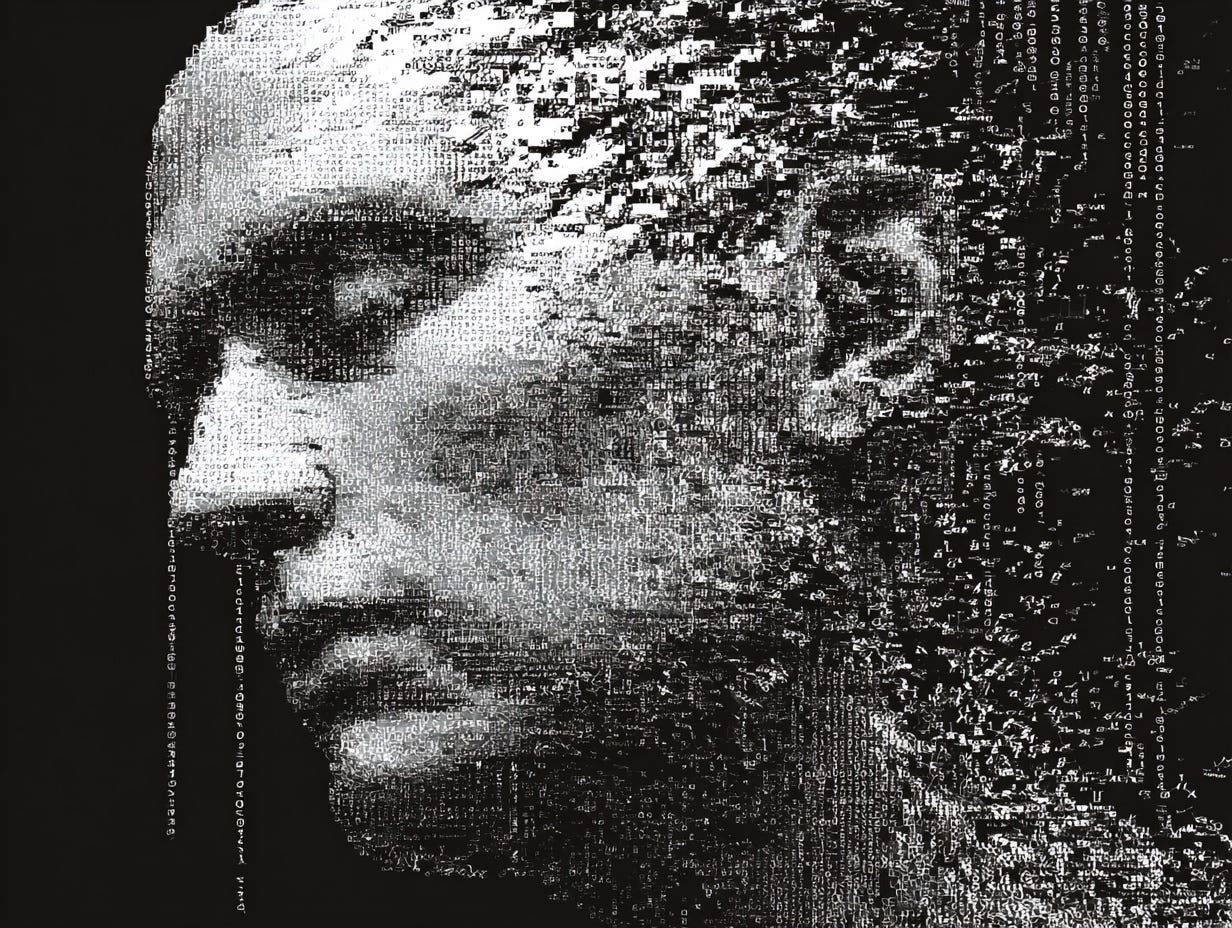
Art by MidJourney AI
The Spell-Casting Machine That is Your Mind
At fifteen years old, I was trapped in a 250-pound obese body, and I lived inside a narrative prison of my own construction. The stories I told myself were active spells or curses, and these thoughts generated a reality of isolation and self-destruction. “No one will ever love me.” “I’m cursed.” “I’m trapped forever.” These weren’t observations about reality; they were the commands I was unconsciously feeding to my nervous system, and it executed them with brutal efficiency, driving behaviors that deepened both my weight and my despair.
The transformation began when my father introduced me to meditation and Buddhist philosophy, while lucid dreaming and brief explorations into ritual magick cracked open my first glimpses of consciousness as a malleable field. Through these practices, I discovered something that would reshape everything: metacognition, the ability to observe my own thoughts as they constructed reality in real-time. I could finally see the direct line from thought to emotion to action to consequence, the spell-casting chain that had been running on autopilot. Meditation created enough quiet in the neural noise that I could begin to consciously uninstall the destructive narratives and experiment with new ones. The suicidal ideation that made self-destruction feel valid began to dissolve as I installed new programs: that I was valuable, that my future contained possibilities worth living for, that transformation was not just possible but inevitable if I changed the underlying code.
This was consciousness engineering. Later, years of psychedelic exploration and continued meditation have only confirmed what that teenage transformation taught me: our identities are far more fluid than we believe, and the stories we tell about who we are become the reality-generating algorithms that determine who we become. We can be anyone at any time. The only question is whether we’ll remain unconscious passengers or become deliberate programmers of our own experience.
Your nervous system is the ultimate magical tool, and neuroscience is finally showing us the user manual. Every thought you think, every story you tell yourself, acts as a command prompt to your biological operating system, triggering cascades of neurochemical changes that ripple outward to shape your experience of reality. This isn’t even a metaphor, it’s the literal mechanics of how consciousness operates.
Consider what happens when you wake up and tell yourself “I’m terrible with money.” Your brain’s interpreter module, what neuroscientist Michael Gazzaniga identified as the left hemisphere’s compulsive narrator, doesn’t just describe this reality. It actively constructs it. This narrative engine generates predictions about financial situations, heightens anxiety around monetary decisions, and creates a perceptual filter that highlights every confirming instance while editing out contradictory evidence. The story becomes a self-fulfilling biological program. In essence, a self-fulfilling prophecy.
The emerging synthesis of cognitive science, neurolinguistics, and consciousness research reveals that what chaos magicians have long claimed - that belief is a technology for reshaping reality - has a robust scientific foundation. The brain doesn’t passively perceive an objective reality “out there.” Instead, as neuroscientist Anil Seth demonstrates, it generates a controlled hallucination that we experience as reality. Your narratives are the code that programs this hallucination.
The Controlled Hallucination You Call Reality
Right now, as you read these words, your brain is performing an astonishing feat of reality construction. It’s taking ambiguous sensory data, not much more than photons hitting your retina, and weaving them into the seamless experience you call “reading.” But here’s where it gets strange: your brain isn’t waiting for sensory input to tell it what’s there. It’s actively predicting what should be there based on your internal narratives, then using sensory data merely to correct its predictions when they’re wrong.
This process of predictive processing means you’re not experiencing reality directly, but rather you’re experiencing your brain’s best guess about reality, constantly updated but fundamentally constructed from the inside out. Seth calls this a controlled hallucination, and he means it literally. The only difference between the hallucinations of ordinary waking consciousness and those induced by psychedelics or psychosis (or another class of chemicals known as deliriants - such as datura) is the degree of control and consensus.
When you hold a strong narrative about yourself or the world, you’re installing a powerful prediction filter that shapes this controlled hallucination. The person who believes “I’m socially awkward” literally perceives different social data than someone who believes “People find me interesting.” Their brains predict different outcomes, notice different cues, and generate different behavioral responses. Two people can attend the same party and experience completely different realities.
The Pygmalion Effect demonstrates this reality-generating power in action. When teachers were told certain students were “intellectual bloomers” (chosen at random), those students showed real IQ gains by the year’s end. The teachers’ narrative didn’t just influence their behavior, it created a cascade of micro-interactions, expectations, and opportunities that literally reshaped the students’ cognitive development. The story became biological reality through the mechanism of its own telling.
The Placebo Effect as Biological Spell-Casting
Perhaps nowhere is the reality-generating power of narrative more dramatically demonstrated than in the placebo effect (and, conversely, the nocebo effect). When a Parkinson’s patient receives a sugar pill they believe is an expensive medication, their brain doesn’t just “think” it’s getting better. Their brain releases actual dopamine, shows measurable improvement in motor function, and exhibits the same neural activity as if they’d received the real drug. The narrative about the treatment becomes the treatment.
Dr. Ted Kaptchuk’s research at Harvard pushes this even further into what chaos magicians would recognize as pure belief-as-technology territory. He’s shown that placebos work even when patients know they’re placebos, as long as they’re given a compelling narrative about how the ritual of treatment itself triggers healing responses. The spell doesn’t require deception, just a meaningful story that the nervous system can execute.
This challenges our fundamental assumptions about the boundary between mind and matter. The narrative “this will heal me” doesn’t just create a psychological experience of healing, but rather it triggers actual biological healing responses. Endorphins flood the system. Immune function shifts. Gene expression changes. The story becomes flesh through documented biological pathways.
A 2014 study published inScience Translational Medicinefound that when Parkinson’s patients were given placebos, those told the placebo was an expensive treatment showed greater motor improvement than those told it was cheap. The price narrative alone (literally just a pure story with no physical component) created different neurological outcomes. The spell was cast through words alone, and the nervous system obediently executed the program.
Language as Reality Code
Your language doesn’t just describe your thoughts, it shapes what thoughts are possible. Linguistic relativity research reveals that the words available to you literally influence what you can perceive. Russian speakers, with separate words for light and dark blue, detect shade differences faster than English speakers. The Pirahã people, whose language lacks numbers, struggle with counting tasks that seem elementary to us. The Guugu Ymithirr (Australian Aboriginal people of Far North Queensland), using absolute rather than relative directions, maintain perfect orientation even in darkness.
This is more than an academic curiosity. This information reveals how the narrative structures available to you (based on the language you speak and the concepts embedded in them) shape your reality tunnel. When you say “I’m bad with money,” you’re not just using words. You’re activating a specific neural network, triggering stress hormones, tensing particular muscles, and creating a biological state that makes good financial decisions less likely. The words are an incantation that summons a particular reality into being.
Neuro-Linguistic Programming, stripped of its more extravagant claims, demonstrates this principle in action. When you change your language from “I am depressed” to “I’m experiencing some depressing thoughts,” you’re not playing word games, you are literally restructuring your neural activity. The first statement creates identification, permanence, and global attribution. The second creates distance, temporality, and specificity. Different language patterns create different biological realities.
Consider how you describe challenges in your life. Do you say “This is destroying me” or “This is strengthening me”? The words you choose don’t just reflect your experience, they actively generate it. Your nervous system responds to the narrative, releasing either stress hormones that impair function or growth factors that enhance resilience. The story you tell becomes the biological reality you inhabit.
The Alternate Persona Protocol: Installing Identities as Operating Systems
Here’s where we move from theory to practice, from understanding the mechanism to operating it deliberately. The Alternate Persona Protocol, adapted from chaos magic practices and grounded in psychological research on self-concept flexibility, treats identity itself as technology you can consciously operate.
Here’s the protocol. Choose a specific capability you want to develop such as confidence, creativity, or discipline. But instead of trying to “become” confident through willpower, you will craft and create a detailed fictional character who embodies this quality. You can give them a name if you’d like. Give them a backstory that explains their confidence, specific mannerisms that express it, thought patterns that maintain it.
For exactly 72 hours, you will act as if you are this person - you will wear this character like an Alternate Persona. The time boundary is arbitrary, but it makes the experiment psychologically safe while creating urgency and focus. You make decisions as this character would, respond to situations from their perspective, even adopt their posture and speaking patterns. Your nervous system, that excellent servant but terrible master, begins executing this new program. This isn’t just pretending, but rather you are engineering a coherent narrative structure that your nervous system can execute. Method actors certainly know the power of this practice.
You’re not trying to permanently believe something new. You’re using the natural mechanism of your body and mind to adjust to becoming a new version of yourself, a kind of alter-ego. You’re temporarily installing a different operating system to access different capabilities. Chaos magicians call this paradigm shifting - the ability to adopt beliefs as tools rather than truths. Neuroscience reveals why it works: your brain’s predictive processing system generates reality based on whatever narrative framework is currently active.
After the first go with this practice, the integration phase is crucial. After 72 hours, you consciously step out of the Alternate Persona and examine what happened. Which aspects felt surprisingly natural? What capabilities emerged that you didn’t know you had? These discoveries can be gradually integrated into your default narrative, expanding your sense of what’s possible. You’re not changing who you are, but rather you’re discovering that who you are is far more fluid than you imagined.
Reality Tunnel Mapping: Exposing Your Prediction Engine
Your brain is constantly generating predictions about what will happen next - this is the predictive processing that neuroscience reveals as fundamental to perception itself. These predictions aren’t passive; they actively shape what you notice, how you behave, and ultimately what manifests. The Reality Tunnel Mapping protocol makes this invisible spell-casting visible, allowing you to debug your own perceptual programming.
For seven days, become a forensic investigator of the gap between your predictions and what actually occurs. Document every significant divergence: when you brace for rejection but receive acceptance, expect failure but find unexpected success, anticipate ease but encounter resistance, or predict hostility but meet indifference or kindness. Focus especially on social interactions and challenging tasks, these are where your predictive narratives run strongest and create the most reality distortion.
You’re not just logging failed predictions. You’re mapping three interconnected phenomena: the prediction itself (what your nervous system expected), the reality (what actually occurred), and the influence (how your prediction shaped your behavior, which then influenced the outcome). For example, you predict “This presentation will go poorly,” which leads you to speak tentatively and avoid eye contact, which causes the audience to seem disengaged, which appears to confirm your prediction. But was it prophecy or self-fulfilling spell?
After seven days, review your data for recurring patterns. These patterns reveal the architecture of your reality tunnel, the invisible boundaries that determine what experiences are available to you. You might discover you consistently predict rejection in specific contexts, creating defensive behavior that generates distance. Or you expect incompetence in certain domains, approaching them with tentative energy that ensures mediocre results. Perhaps you anticipate hostility from authority figures, triggering a defensive stance that provokes the very hostility you feared. These are the reality-shaping algorithms that your nervous system runs automatically.
Once you’ve mapped your tunnel, you can begin installing experimental predictions. This isn’t positive thinking or forcing false beliefs. It’s recognizing that multiple predictions are always possible, and the one you energize influences what manifests. For each limiting pattern you’ve identified, design an alternative prediction that’s believable but less limiting. If you always predict “This presentation will suck,” try “Some people will find value in what I share.” Run it as a 24-hour experiment, holding this prediction as temporary programming while observing how your preparation changes, what shifts in your body language and voice, what you notice differently in others’ responses, and what opportunities become visible that weren’t before. Document your results without attachment to them. You’re a scientist of your own experience here, you’re not trying to prove the new prediction “true” but exploring how different predictions create different realities.
The deepest insight from this protocol isn’t about replacing bad predictions with good ones. It’s the recognition that all predictions are provisional technologies, and you can consciously choose which ones to run based on the reality you want to explore. Your reality tunnel isn’t fixed or set in stone. It’s software, and you’ve just learned how to access the code.
Tracing the Social Consensus Spell
Your personal narratives don’t exist in isolation but are embedded in a social matrix of shared stories that reinforce or challenge your individual programming. The Social Consensus Spell protocol reveals how the collective narratives around you shape your personal reality tunnel.
Map the dominant narratives of the five people you spend the most time with. What stories do they tell about human nature, about what’s possible, about how reality works? Notice which narratives support your growth and which ones reinforce limitations. You’re not judging these people, you’re merely becoming conscious of the narrative ecosystem you inhabit.
This reveals something chaos magicians understand intuitively: reality is a consensus, and that consensus is maintained through shared narrative. When everyone around you believes “success requires suffering,” that narrative becomes a kind of collective spell that shapes everyone’s experience. Breaking free from limiting patterns often requires examining not just your personal stories but the social stories that sustain them.
Consider your media diet as part of this ecosystem. Every news article, social media post, the music you listen to, the books you read, and the entertainment programs you consume carry implicit narratives about how reality works. The person who consumes a steady diet of catastrophic news and cynical commentary is literally programming their nervous system to perceive threat and limitation. The narrative environment you inhabit becomes the reality you experience.
Strategic narrative intervention becomes possible once you see the social consensus clearly. You can begin introducing different stories into conversations, sharing experiences that exemplify different realities, asking questions that invite others to examine their narratives. You become a reality hacker, not through mystical powers but through conscious participation in the collective storytelling that creates consensus reality.
Narrative Therapy: Healing Through Coherence
Trauma and suffering often exist as fragmented experiences that are disconnected sensory memories, isolated painful moments, incoherent pieces that intrude into consciousness without warning. The Narrative Integration Ritual, drawing from narrative therapy and expressive writing research, transforms these fragments into coherent stories that can be metabolized and integrated.
Choose an area of your life that feels chaotic or painful, such as an unhealed experience in the past that still haunts you. Instead of trying to fix or escape it, you’re going to perform an act of narrative alchemy. Write continuously for 15 minutes about this experience without editing, letting whatever emerges flow onto the page. This isn’t about creating a polished story but about allowing the fragments to surface. Pick a safe place and a consistent time to repeat this exercise over the next four days.
Next, create a timeline of key events related to this area. Include both difficult and positive moments. Look for patterns, turning points, moments when something shifted even slightly. You’re not imposing meaning but discovering the organic structure that already exists within your experience.
Now comes the integration: write a coherent narrative that incorporates all these elements. Focus on how challenges led to growth, what strengths emerged from struggle, where unexpected grace appeared. This isn’t about denying pain or forcing positivity but about recognizing that every experience can be woven into multiple stories, and you get to choose which story you energize.
James Pennebaker’s research on Narrative Therapy demonstrates that this process creates measurable biological changes. Writing about traumatic experiences for just 15-20 minutes over three days boosts immune function, reduces blood pressure, and improves psychological well-being for months afterward. The act of creating narrative coherence literally changes your biology.
Note: This protocol addresses narrative trauma - the cognitive stories we construct around difficult experiences - but not somatic trauma that’s encoded directly in the body’s nervous system. Somatic trauma manifests as physical tension, dysregulation, or dissociation and requires body-based approaches rather than narrative work alone. James Pennebaker’s research demonstrates the power of expressive writing for processing narrative dimensions of trauma. Erick Godsey has also published online an excellent framework for understanding how different therapeutic modalities address these distinct layers of traumatic encoding.
Resistance as Information: When the Old Story Fights Back
When you begin experimenting with narrative technology, expect resistance. Parts of you will insist on maintaining old stories, even painful ones. This isn’t pathology but rather protection. Drawing from Richard Schwartz’s Internal Family Systems model, this approach recognizes that you aren’t a singular, unified self but rather a dynamic ecosystem of distinct psychological parts, each with its own perspectives, memories, and roles. This internal ecosystem contains protective parts that emerged to shield you from pain, as well as vulnerable, wounded parts (often called “exiles”) that hold difficult emotions or memories. The protector parts will defend against anything that might trigger these vulnerable parts, often through behaviors that seem irrational or self-sabotaging but are actually serving a protective function within the system’s logic. For example, your narrative of unworthiness might be protecting you from the vulnerability of believing you deserve love. And the story of limitation might be shielding you from the responsibility of freedom.
Instead of fighting this resistance, treat it as information. If part of you desperately maintains a narrative of “I’m not creative,” get curious about what it’s protecting you from. Fear of judgment? Fear of failure? Fear of success? Thank this protective part for its service, then gently update it on current reality. You’re not the same person who needed that protection. You have new capabilities, new resources, new possibilities.
As mentioned before, Richard Schwartz’s Internal Family Systems model recognizes that we contain multiple sub-narratives or “parts,” each maintaining different stories about who we are and what we need. These parts can conflict, creating internal narrative chaos that manifests as anxiety, depression, or self-sabotage. Integration doesn’t mean silencing these parts but harmonizing their stories into a more coherent whole.
The somatic dimension can’t be ignored. Narratives aren’t just mental, they’re embodied. A story of perpetual threat creates chronic muscular tension. A narrative of inadequacy creates collapsed posture. Changing narratives requires working with the body too. Breathe into the places where old stories are held. Move in ways and explore new postures or physical actions that embody new narratives. Let your body learn the new story through direct experience.
Beyond Individual Transformation: The Collective Spell
Every social movement is fundamentally an act of collective narrative magic. The civil rights movement didn’t just change our laws, it transformed our collective story from “separate but equal” to “injustice anywhere is a threat to justice everywhere.” The marriage equality movement shifted the narrative from a political issue to a simple truth: “love is love.” These weren’t just slogans but spells that reshaped collective reality.
We’re living through what could be called a reality crisis, the breakdown of shared narrative consensus as a result of social media algorithms and an increasing complexity of information to dig through and discern around. The explosion of information sources and alternative facts has shattered the collective story. This presents both danger and opportunity. The danger is narrative tribalism, where incompatible stories create incompatible realities. The opportunity is conscious participation in writing new collective stories. In my opinion the best and consistently most effective way to do this is through art, especially narrative forms of art such as film or literature. This is the primary modus operandi of the now-defunct chaos magic order and art collective Thee Temple ov Psychick Youth, founded by the late great Industrial music pioneer Genesis P-Orridge.
The narratives that brought us to our current global challenges - endless growth, human supremacy over nature, technological salvation - are the same stories creating those challenges. New narratives aren’t just nice to have; they’re essential for navigating the crises we face. But these new stories can’t be imposed from above. They must be woven from the bottom up, through millions of individual narrative experiments that gradually shift the collective possibility space.
The Technology of Belief in Practice
Understanding that belief is a technology rather than a truth changes everything. You don’t need to permanently convince yourself of anything. You just need to temporarily install narratives that allow you to access different capabilities and experiences. The great psychedelic philosopher and psychologist Robert Anton Wilson affectionately calls Belief Systems “BS”. This is what chaos magicians mean when they say “nothing is true, everything is permitted” - not that reality doesn’t matter, but that reality is more fluid than we imagine, more responsive to consciousness than we’ve been taught.
Your nervous system is already running narrative programs installed by your culture, your family, your past experiences. Most of these programs operate below conscious awareness, generating your reality without your deliberate participation. The practices outlined here make this process conscious, giving you administrative access to your own reality-generating machinery.
This isn’t to encourage spiritual bypassing, toxic positive thinking, or denying difficult truths. It’s about recognizing that multiple true stories can be told about any situation, that all of our stories are in essence and interpretation of our experience, and that the story you energize influences what becomes possible. The person who tells themselves “I’m learning from this challenge” creates different neural patterns, different hormonal cascades, and different behavioral possibilities than the person who tells themselves “I’ll never recover from this.” Both stories might be true, but they generate different realities.
Living as a Reality Hacker
The invitation here isn’t to believe anything in particular but to experiment with belief itself as a tool. Try on different narratives like trying on clothes, seeing how they fit, what they allow you to do, how they make you feel. Some will resonate and become part of your permanent wardrobe. Others will be worn once and discarded. The power lies not in finding the “right” narrative but in developing narrative flexibility.
Every morning when you wake up, you have a choice. You can unconsciously run the same narrative programs that ran yesterday, generating the same predictable reality. Or you can consciously choose which stories to tell, which predictions to make, which reality tunnel to inhabit.
These protocols work because they align with how your nervous system actually processes narrative information and converts it into embodied reality. Most of our core beliefs operate below conscious awareness - unconscious programs running in the background, generating our experience without our knowledge. Tools like psychedelics, dream work, and meditation can create the metacognitive distance needed to observe these hidden narratives, making the unconscious conscious so we can examine and potentially rewrite our programming. Research on brain states suggests that the liminal moments between waking and sleeping, when the brain enters theta wave states, create windows of heightened neuroplasticity where new narratives can be most effectively installed through practices like affirmations or visualization. This is when the reality-generation system is most receptive to new code, the brief moments when the firewall between conscious intention and unconscious programming becomes permeable.
The science is clear: your brain is a prediction machine, generating a controlled hallucination you call reality based on the narratives you hold. The placebo effect proves that beliefs trigger real biological changes. Linguistic relativity shows that available narratives shape possible experiences. Cognitive behavioral therapy demonstrates that changing stories changes neurochemistry. The evidence is overwhelming - you are already casting spells with every story you tell.
The question isn’t whether your narratives shape your reality. They inevitably do, whether you’re conscious of it or not. The question is whether you’ll remain a passive character in stories written by others or become the conscious author of your own experience. The technology is yours. The user manual is here. What reality will you generate today?
Thanks for reading Jake’s Substack! Subscribe for free to receive new posts and support my work.
Read more of my writing and subscribe on Substack: jakekobrin.substack.com.
