The Season of Descent: What Halloween Can Teach Us
Originally published on my Substack, Writings From The Edge of the Known, where I write regularly. Subscribe there for new essays.
For best results listen to the following Tool song on repeat while reading this essay. Fortunately, YouTube already has made that easy for you…
When the Underworld Calls…
The wheel turns. The light dies. The earth goes cold.
Tonight marks Halloween, and it’s traditional pagan associated holiday Samhain (pronounced sow-wen) - the ancient Celtic new year, when summer’s end meets winter’s beginning. When the veil between worlds grows thin. When the dead walk among the living and the underworld opens its gates.
This isn’t superstition. It’s seasonal wisdom encoded in ritual.
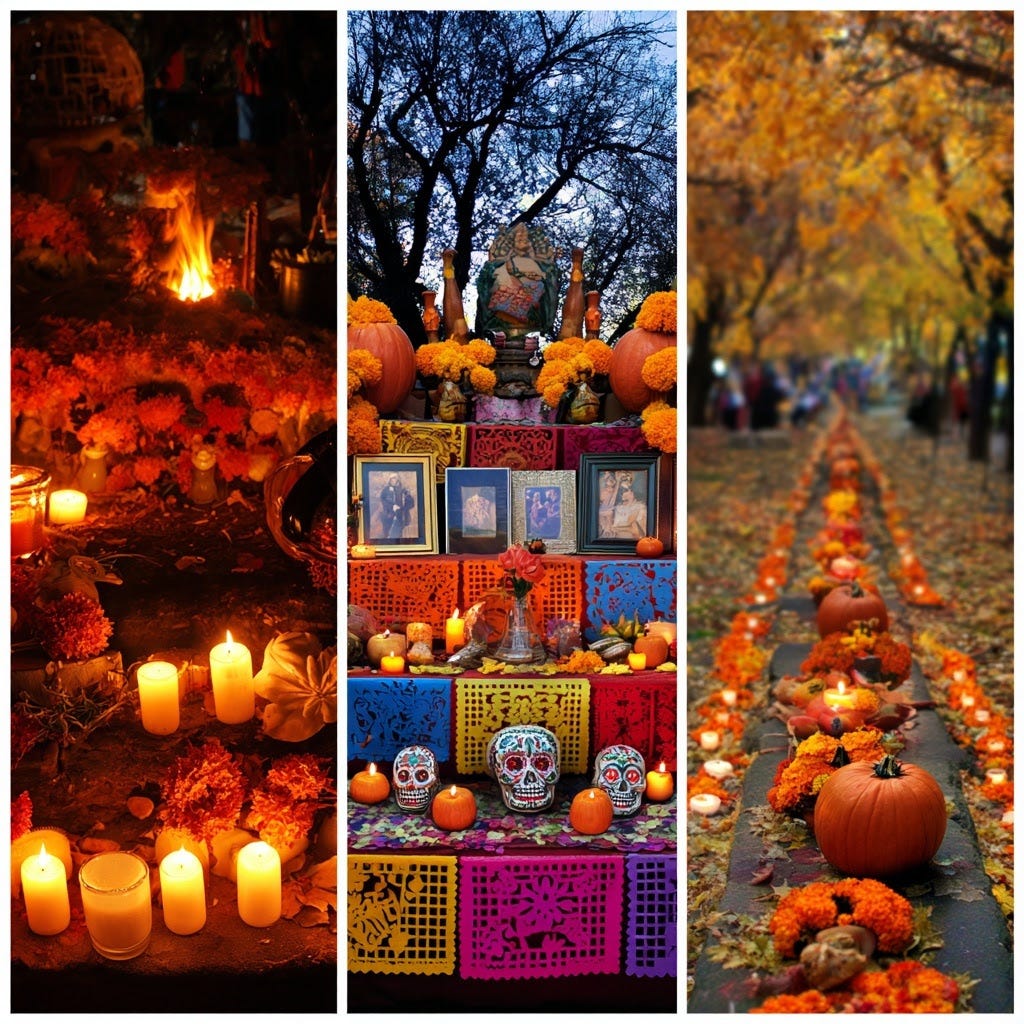
All over the world, cultures mark this threshold in their own way:Día de los Muertosin Mexico, where families build altars to welcome the dead home.All Souls’ Dayin Christian tradition, honoring those who’ve passed.Samhainin Celtic lands, acknowledging that death and life exist on a continuum, not as opposites.
Different names. Same truth.
The season demands descent.
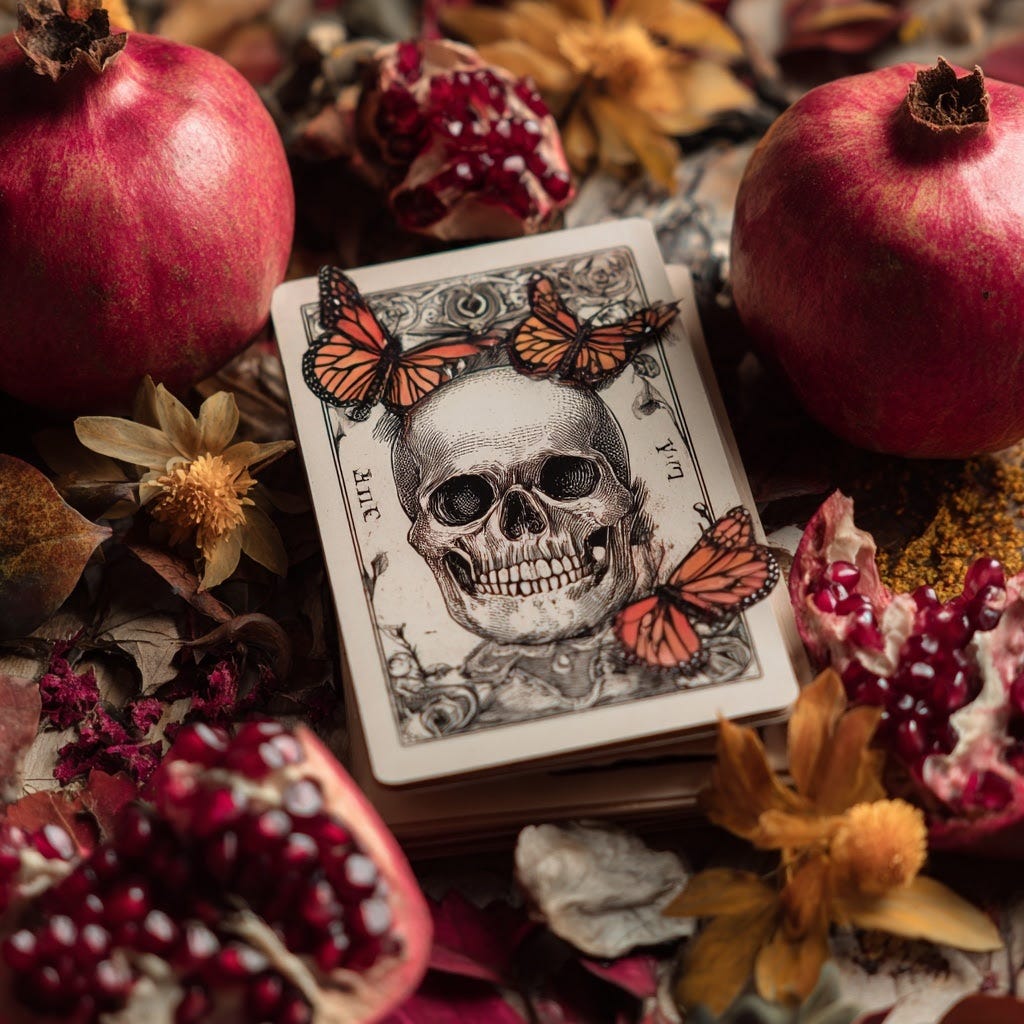
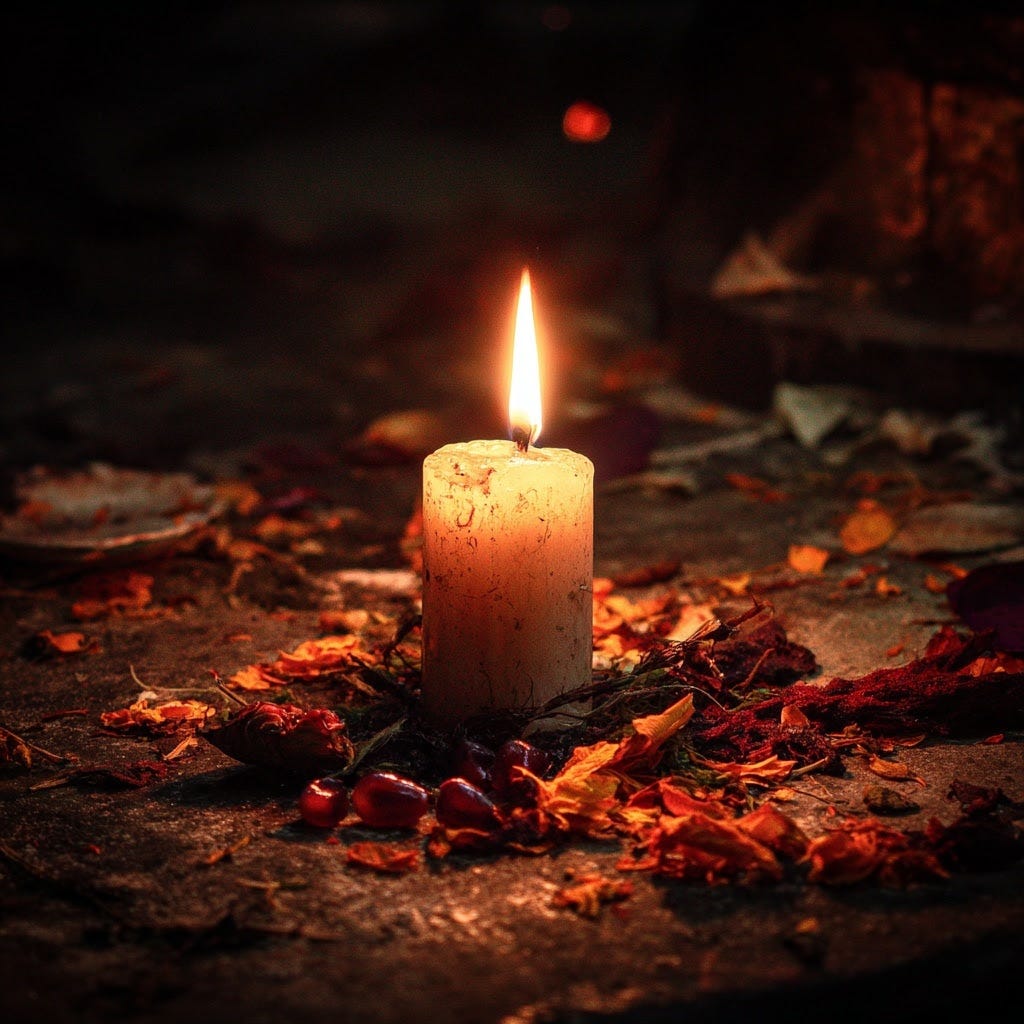
Pomegranates are a traditional symbol related to death and the underworld due to the connection to the Persephone/Hades myth.
THE ASTROLOGICAL INITIATOR
We’re deep in Scorpio season now - the sign of death, transformation, sex, power, and the underworld. The fixed water sign that rules what’s hidden, taboo, and repressed.
Scorpio’s symbol is the scorpion that must die to become the phoenix. Or in some traditions: scorpion → serpent → eagle. Each transformation requires a death. Each rebirth demands a descent.
In tarot, this energy manifests as the Death card (XIII). But Death doesn’t mean ending - it meanstransformation through dissolution.
The card shows a skeletal figure on horseback. Before him fall a king, a bishop, a maiden, a child. Rich and poor. Holy and innocent. No one is exempt. No identity protects you. No amount of spiritual knowledge saves you from the necessity of death.
What must die?
Not your body (not yet). But the false self. The constructed identity. The golden palace you’ve spent years building. The story you tell about who you are.
Scorpio season says:Descend. Face what you’ve avoided. Let the old form die so something real can emerge.
This is the seasonal initiation, whether we choose it or not.
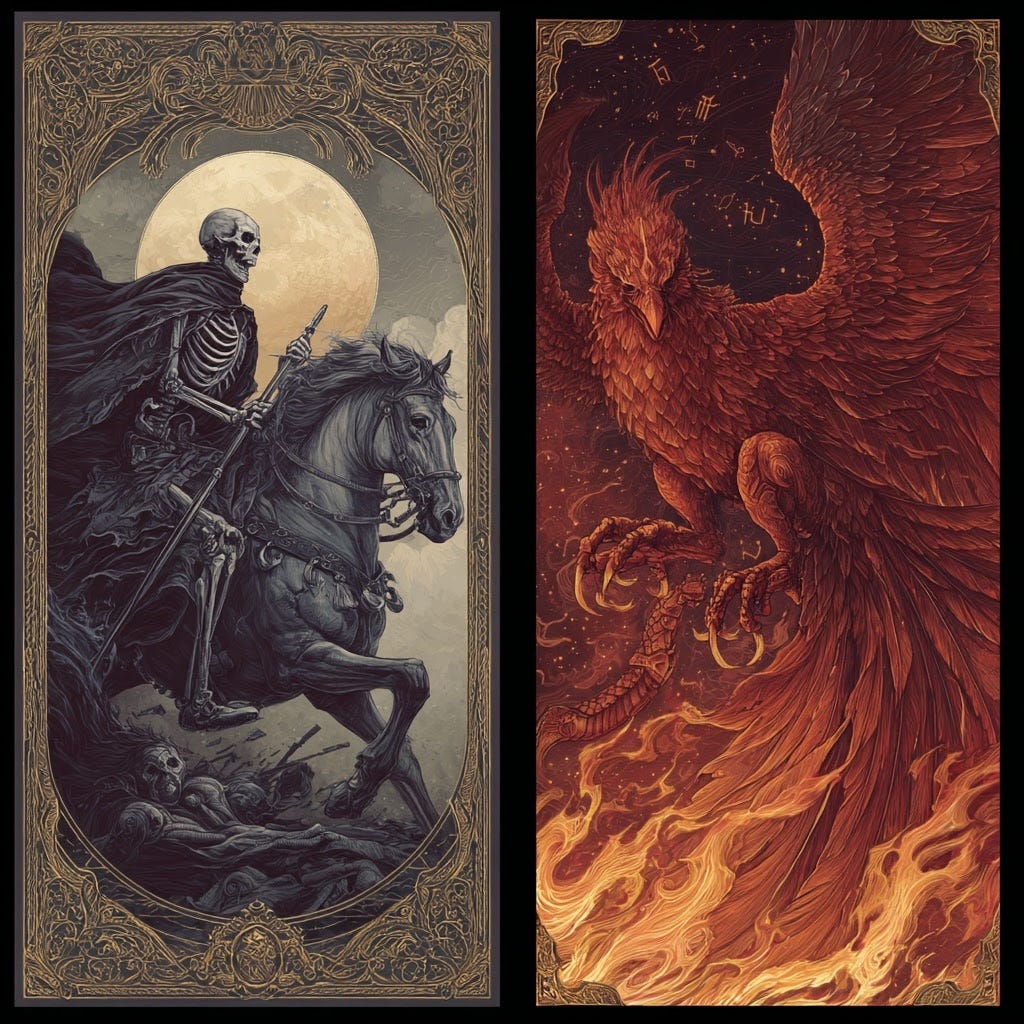
The Death Card XIII - Symbolized by the Grim Reaper with Scythe, The Pheonix, and the Scorpion.
THE TRIPLE GATEWAY
Three festivals converge in these days, each teaching the same mystery from different angles:
Samhainteaches: The ancestors return. The boundary between living and dead becomes permeable. We acknowledge death as part of life, not separate from it. We honor what’s passed while preparing for what’s coming.
Día de los Muertosteaches: Death isn’t the end but a transformation. The dead aren’t gone - they’re changed, still present, still part of the family. We set places at the table for them. We guide them home with marigolds and candles. Death is a door, not a wall.
Halloween(the commercialized descendant) teaches: We dress as what we fear - monsters, ghosts, death itself. We play at being the shadow, touching darkness safely through costume and candy. Children learn: the scary things can be faced, even befriended.
But beneath the costumes and commerce, the old wisdom persists:To live fully, you must know death intimately. To be whole, you must descend to the underworld and return transformed.
The season won’t let you avoid it.
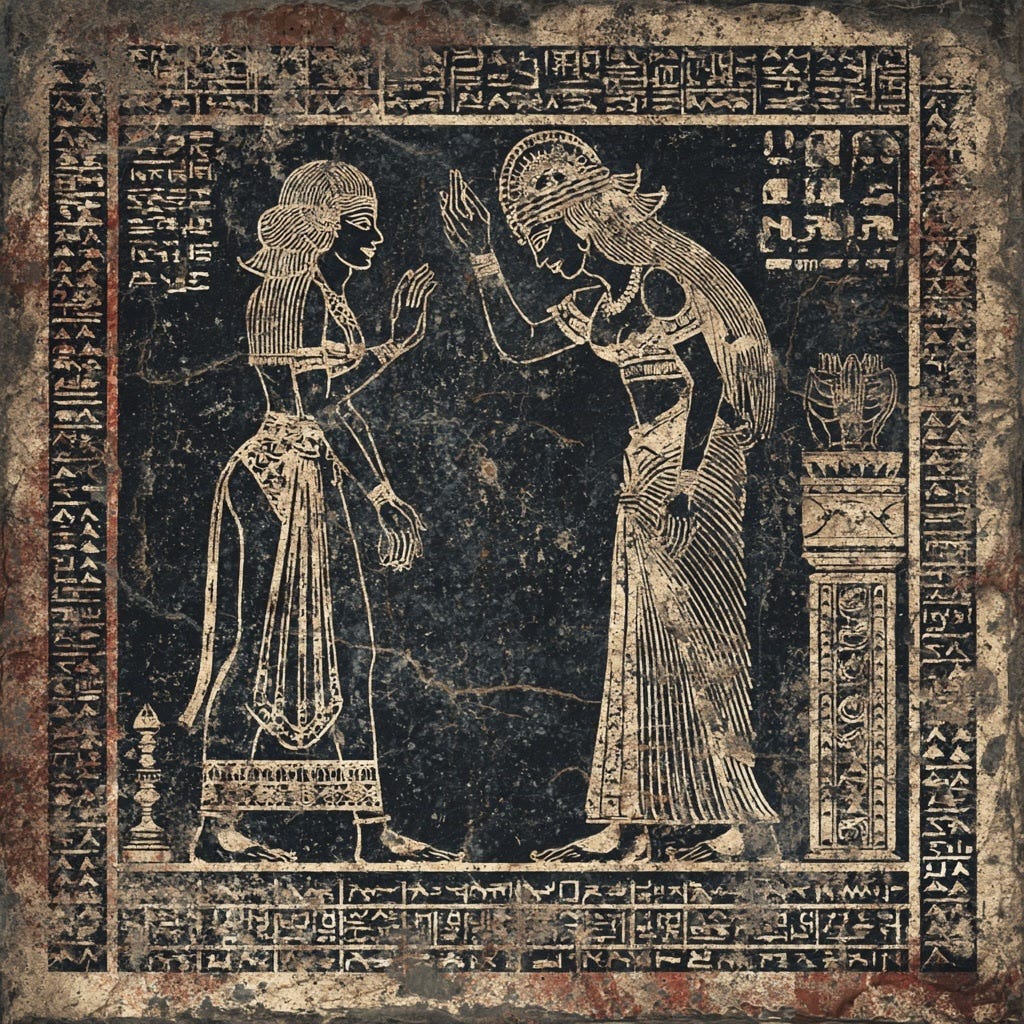
INANNA’S GATES: THE OLDEST DESCENT
The Sumerians knew this 4,000 years ago. Their story of Inanna’s descent to the underworld is the oldest initiatory myth we have.
Inanna, Queen of Heaven, decides to visit her dark sister Ereshkigal, who rules the underworld - the land of no return.
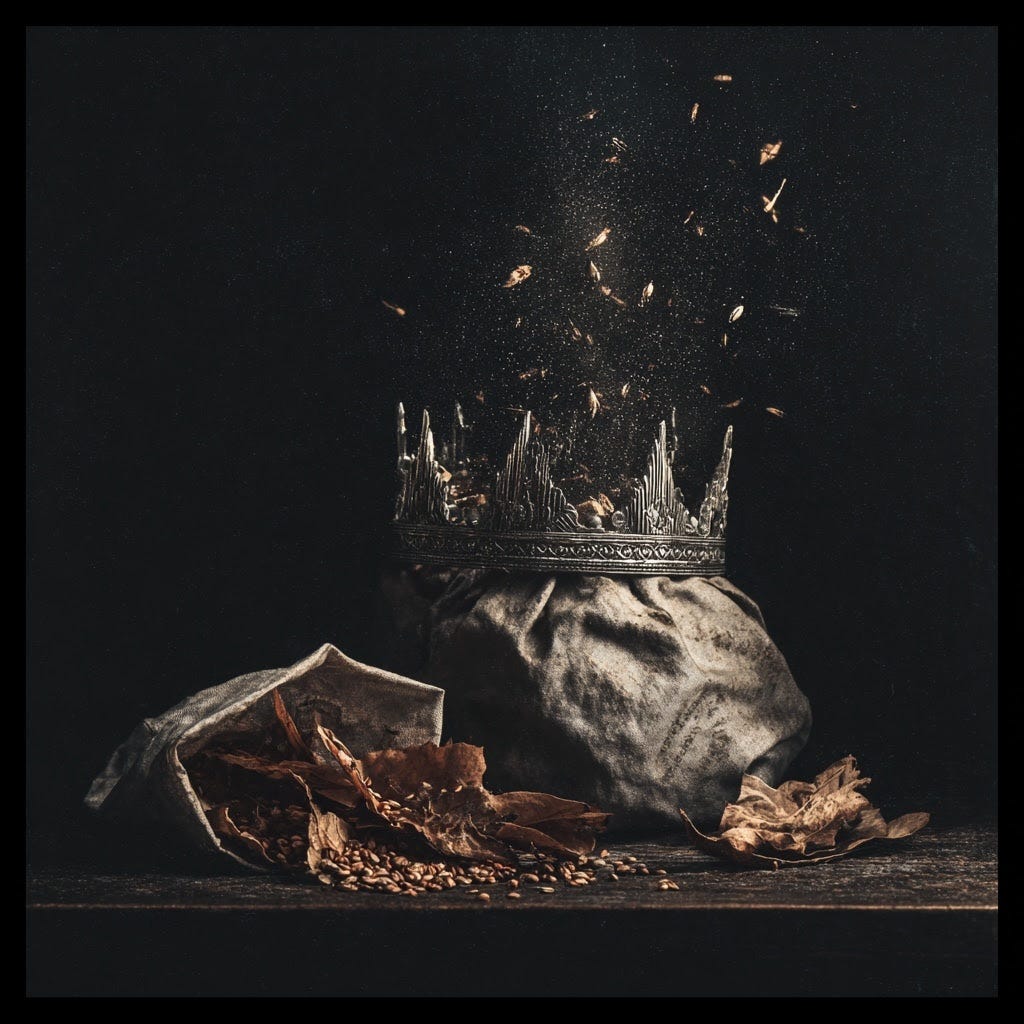
She dresses in all her divine power: lapis crown, lapis measuring rod, double strand of beads, breastplate, gold ring, royal robe. Every piece announces: “I am goddess. I am special. I am above this darkness.”
She arrives at the first gate.
The guardian says: “You may enter, but you must remove your crown.”
Why?she asks.
“These are the ways of the underworld. Be silent.”
At the second gate: “Remove your beads.”
Third gate: “Remove your breastplate.”
Fourth gate: “Remove your ring.”
Gate by gate, piece by piece, everything that makes her “Inanna” is stripped away. Her divinity. Her beauty. Her power. Her identity.
At the seventh gate, she enters completely naked. No crown. No jewels. No robes. No story about who she is.
Just raw, vulnerable, human (despite being goddess).
And there, in the throne room of the underworld, Ereshkigal looks at her sister and kills her. Hangs her corpse on a hook like a piece of meat.
The myth sits with this image for three days and three nights. Three days of being dead meat on a hook. Three days of complete dissolution, no identity, no consciousness, nothing.
Modern retellings rush past this part. Get to the rescue, the resurrection, the return. Make it comfortable.
But that’s precisely what we can’t do.The descent requires sitting in the death.You can’t skip to rebirth. You have to rot first. The seed must dissolve in darkness before it can sprout.
This is the initiation. The real one. Not the workshop version. Not the metaphorical death that lets you go back to your life unchanged.
The actual death of who you thought you were.
THE SHADOW WE ROMANTICIZE
Here’s where we get it wrong in modern spiritual culture:
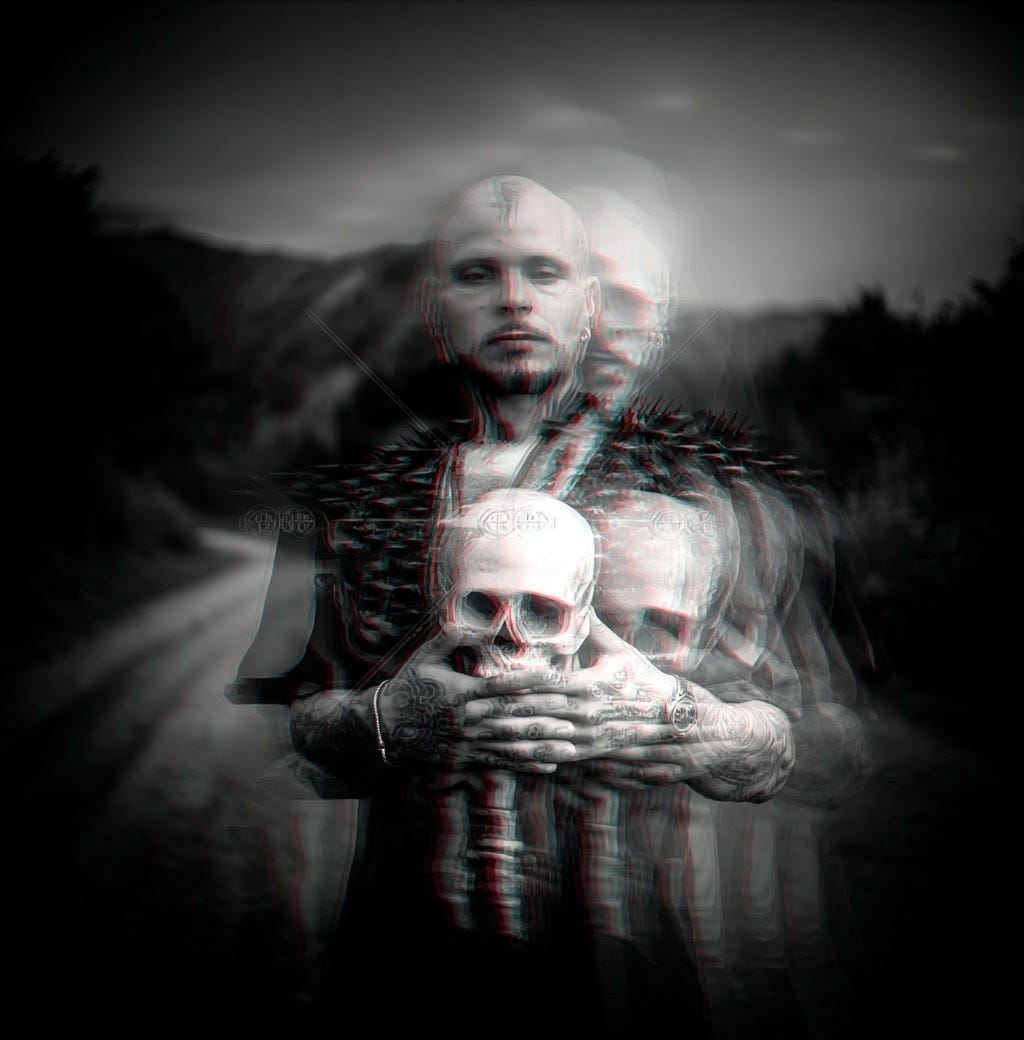
We love to talk about shadow work. We post aesthetic photos of ravens and broken mirrors. We quote Jung and Rumi about the dark night of the soul. We make our darkness interesting, poetic, even sexy.
“I’m doing shadow work,” we say, and it sounds like a spiritual achievement. A depth flex. Proof we’re evolved.
We readOwning Your Own Shadow.We understand archetypes. We can talk about the anima and animus, the persona and the self. We know intellectually that we have darkness in us.
But that’s not shadow work. That’sshadow tourism.
Real shadow work is what happens when you discover - not intellectually, but viscerally - that you’re capable of the exact things you’ve judged in others.
It’s seeing yourself become cruel. Violating. Manipulative. Controlling. Harmful.
It’s the moment you realize: “I am the villain in someone else’s story. And they’re not wrong.”
It’s watching yourself do the thing you swore you’d never do. And not being able to look away. And not being able to explain it away.
The shadow isn’t your “dark side” that makes you mysterious and interesting.
It’s the actual capacity for harm that lives in you, unintegrated, acting through you unconsciously when you’re triggered or desperate or protecting your wounds.
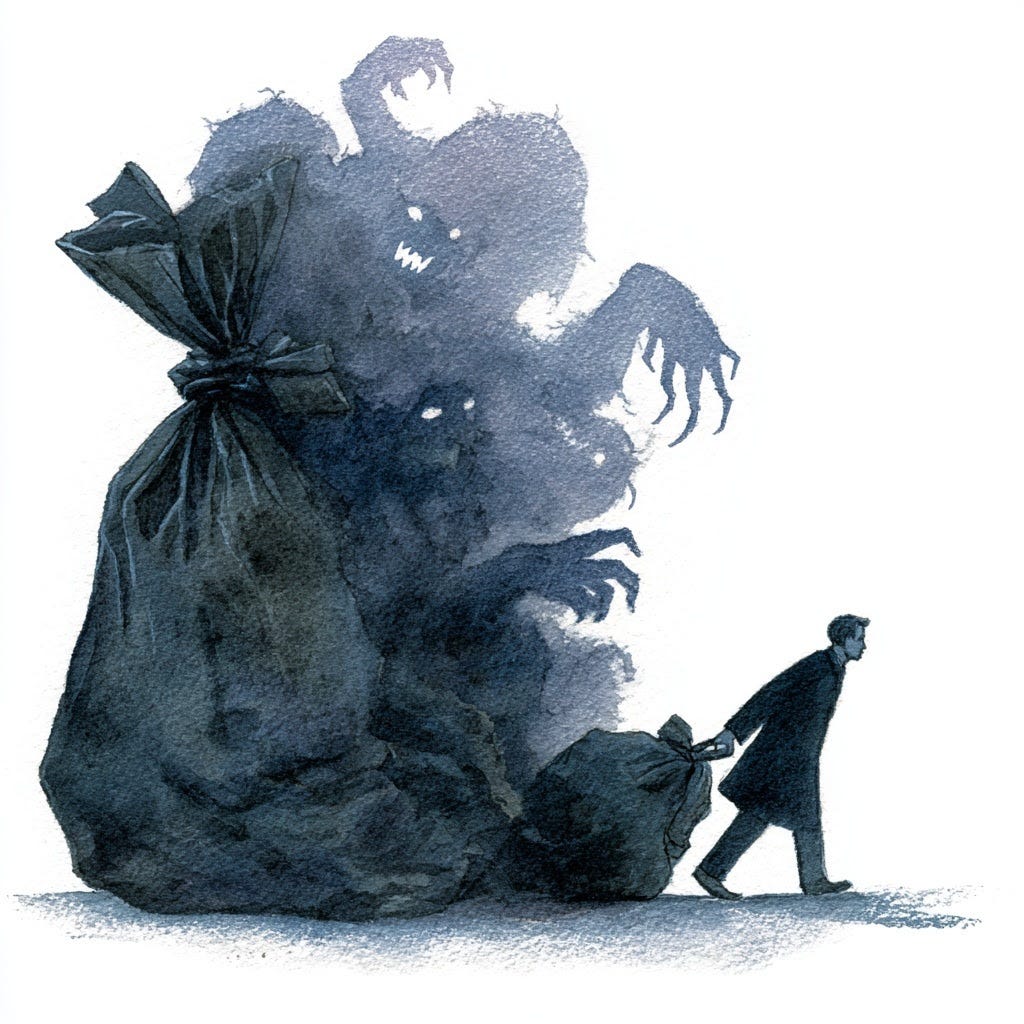
Robert Bly wrote that we all carry an invisible bag behind us. From childhood on, we’ve been putting things in it - everything we were told wasn’t acceptable, everything that threatened our constructed identity, everything we learned to repress.
By adulthood, the bag is heavy. And we drag it everywhere, pretending it’s not there.
Shadow work isn’t acknowledging “I have a bag.” It’s actually opening it. Actually looking at what’s inside. Actually taking those things back into consciousness and integrating them.
And what’s in there isn’t aesthetic. It’s not the brooding artist darkness or the sexy dangerous energy.
It’s your capacity to be petty, cruel, jealous, controlling, violent, violating. It’s your entitlement, your narcissism, your ability to harm people you love when your wounds are activated.
That’s the shadow. And it’s genuinely dangerous when it stays in the bag, unconscious, acting through you.
MY OWN DESCENT (THE UNROMANTICIZED VERSION)
I spent years thinking I’d done the work.
I knew the frameworks. Read Jung, Hillman, Bly, Robert Johnson. I understood archetypal psychology. I practiced ritual and tarot and plant medicine. I could speak fluently about the shadow and the anima and the wounded masculine.
I made art about my darkness. Taught workshops about transformation. Built an identity around being “the one who knows, the one who’s gone deep, the evolved artist.”
That was my golden palace. And it was beautiful. Impressive. It attracted people, opportunities, admiration.
Then I descended. Not by choice. Not in a beautiful, controlled way.
A relationship that mirrored every unhealed wound I carried. Intensity I mistook for depth. Chaos I couldn’t see clearly because I was in it. A dynamic where both of us activated each other’s worst patterns.
And in that crucible, I became things I thought only other people became. I caused harm I’m still reckoning with. I violated boundaries I didn’t even realize I was crossing until it was too late. I was cruel in ways that haunt me.
The relationship ended catastrophically. Social exile followed. Loss of community. Loss of home. Loss of reality itself for months - I couldn’t trust my own perception of what had happened.
The golden palace collapsed completely.
And in the rubble, I had to face the truth:All my knowledge about shadow work hadn’t prevented my shadow from acting through me.
All my intellectual understanding hadn’t translated to actual integration. I’d been reading maps of the underworld, not actually descending.
I’d been doing shadow tourism while my actual shadow ran the show unconsciously.
That’sthe descent. Not the version you read about in books. Not the hero’s journey with clear stages. The one that actually breaks you open and forces you to see what you’ve been avoiding.
The one where you lose the identity you’ve spent years constructing and have to find out who you actually are underneath the story.
THE ALCHEMICAL SOLVE
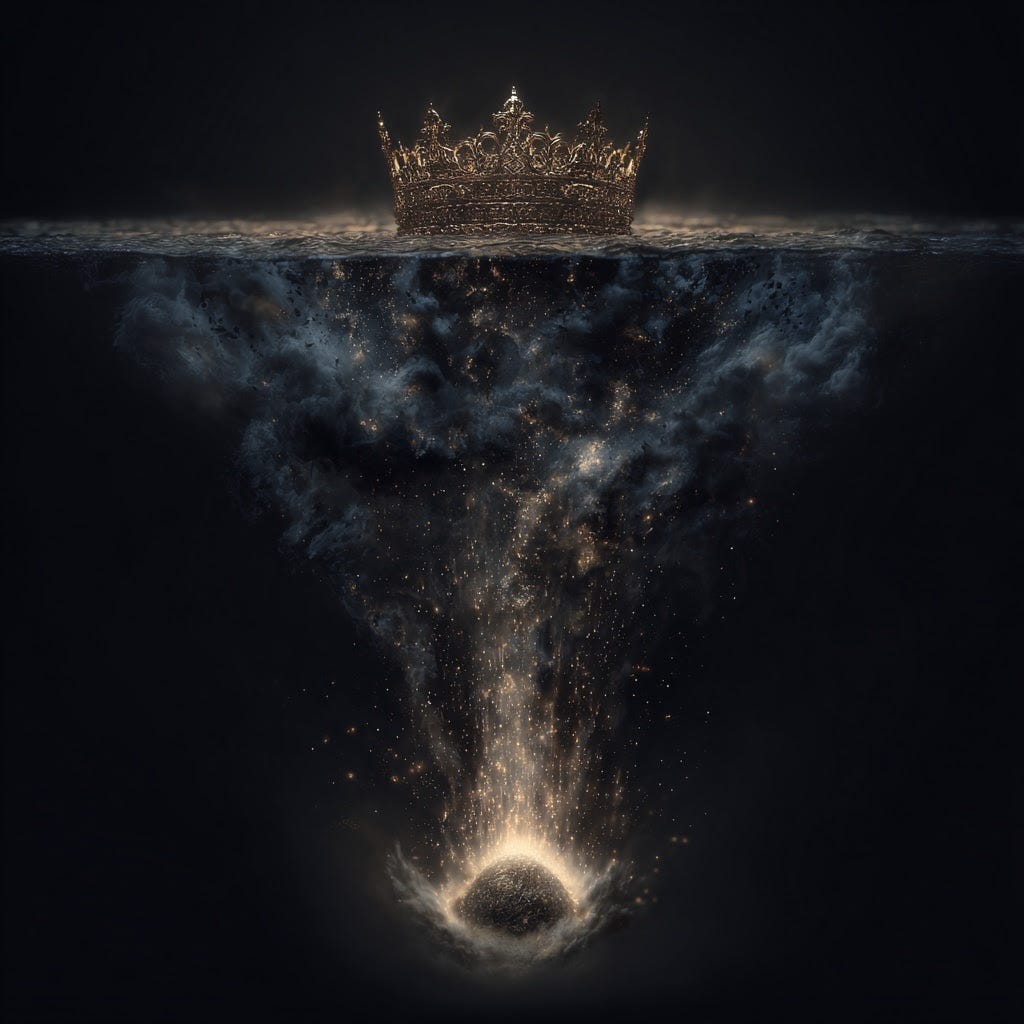
The alchemists understood this process intimately. They had an image that haunted their manuscripts: A king drowning in water, hands raised, calling for help.
But the help he needs isn’t rescue from the water.
The help he needs is to stop fighting. To surrender. To sink to the bottom. To dissolve completely.
Only there, in the darkest depth of dissolution, can the transformation happen.
They called this stage thenigredo- the blackening. The putrefaction. The necessary death before rebirth.
Modern people hate this stage. We want to skip from problem to solution, from wound to healing, from death to resurrection. We want the transformation without the dissolution.
But you can’t skip thenigredo.You can’t transcend it or think your way past it or spiritual-bypass around it.
The golden king must drown. The false self must dissolve. The constructed identity must die.
And you have to let it happen. Sit in the dissolution. Be with the death. Stop reaching for resurrection before the death is complete.
This is what autumn teaches us in the natural world: Death isn’t failure. It’s the necessary passage. The leaf must fall. The seed must rot in darkness. The earth must go dormant.
Not as punishment. Asprerequisite for rebirth.
Spring doesn’t come without winter’s death first.
THE UNDERWORLD’S CURRICULUM
What does the underworld actually teach? What’s the curriculum of the descent?
From my own experience and the myths that guide us:
1. You’re not special.The crown must come off. The story that makes you exceptional, exempt, above the ordinary human struggles - that has to die. You’re just human. Capable of the full human range - including harm.
2. Your shadow acts through you when unconscious.All the things you’ve repressed, all the parts you’ve exiled to the bag - they don’t go away. They act through you in moments when you’re triggered, desperate, protecting wounds. Integration is the only answer.
3. Intensity isn’t depth.I mistook the chaos and drama for profound connection. The nervous system activation for passion. The trauma bond for love. Real depth is often quieter, stabler, less dramatic.
4. Knowledge doesn’t equal integration.You can know all about shadow work intellectually and still have your shadow run the show. Understanding the map isn’t the same as taking the journey.
5. You can love someone and harm them.This was the hardest lesson. Love doesn’t prevent harm if your patterns are unhealed. Good intentions don’t undo actual impact. You can genuinely love someone and genuinely violate them.
6. The wound you carry can become the wound you cause.Hurt people hurt people isn’t an excuse - it’s a warning. If you don’t heal your wounds consciously, you’ll inflict them on others unconsciously.
7. Exile can be initiation.What felt like curse or punishment or injustice - losing community, losing home, losing identity - can be the underworld’s way of forcing the necessary death. The community that exiles you might be giving you the initiation you need.
These aren’t comfortable lessons. They don’t make good Instagram quotes. They’re the brutal curriculum of actual descent.
THE WOUNDED HEALER EMERGES
After three days on the hook, Inanna is rescued. Helper figures come, speak the words of mourning that Ereshkigal needed to hear, and bring Inanna back to life.
But she doesn’t return the same.
She’s been to the land of no return and come back. She’s been stripped naked, killed, hung as meat. She knows death intimately now.
She returns scarred. Changed. Carrying knowledge of the underworld that the gods of heaven don’t possess.
This is the archetype of the wounded healer - Chiron in Greek mythology, wounded by a poisoned arrow that would never heal, who became the greatest healer and teacher precisely because he carried the wound.
The shaman in indigenous traditions who must be broken apart (through illness, vision, ordeal) before they can guide others to healing.
The initiated elder in tribal cultures who’s been through the death lodge and returned able to guide the young through their own initiations.
You descend. You face what’s there. You die to who you were.
And you return able to serve others, not because you’re above the darkness, but because you’ve been to the bottom and know the way.
The wound doesn’t make you broken. It makes you medicine -if you actually integrate it instead of running from it or romanticizing it.
This is the gift of the descent: You become someone who can help others navigate their own underworld journeys. Not by giving them a map. Not by telling them how to avoid it.
But by saying: “I went there. I faced what I didn’t want to face. I died and came back. You can too.”
That’s worth more than all the golden palaces ever built.
THE SEASON’S DEMAND
So here we are: Halloween night. Samhain. Scorpio season. The Death card prominent.
The wheel has turned. The gates are open. The veil is thin.
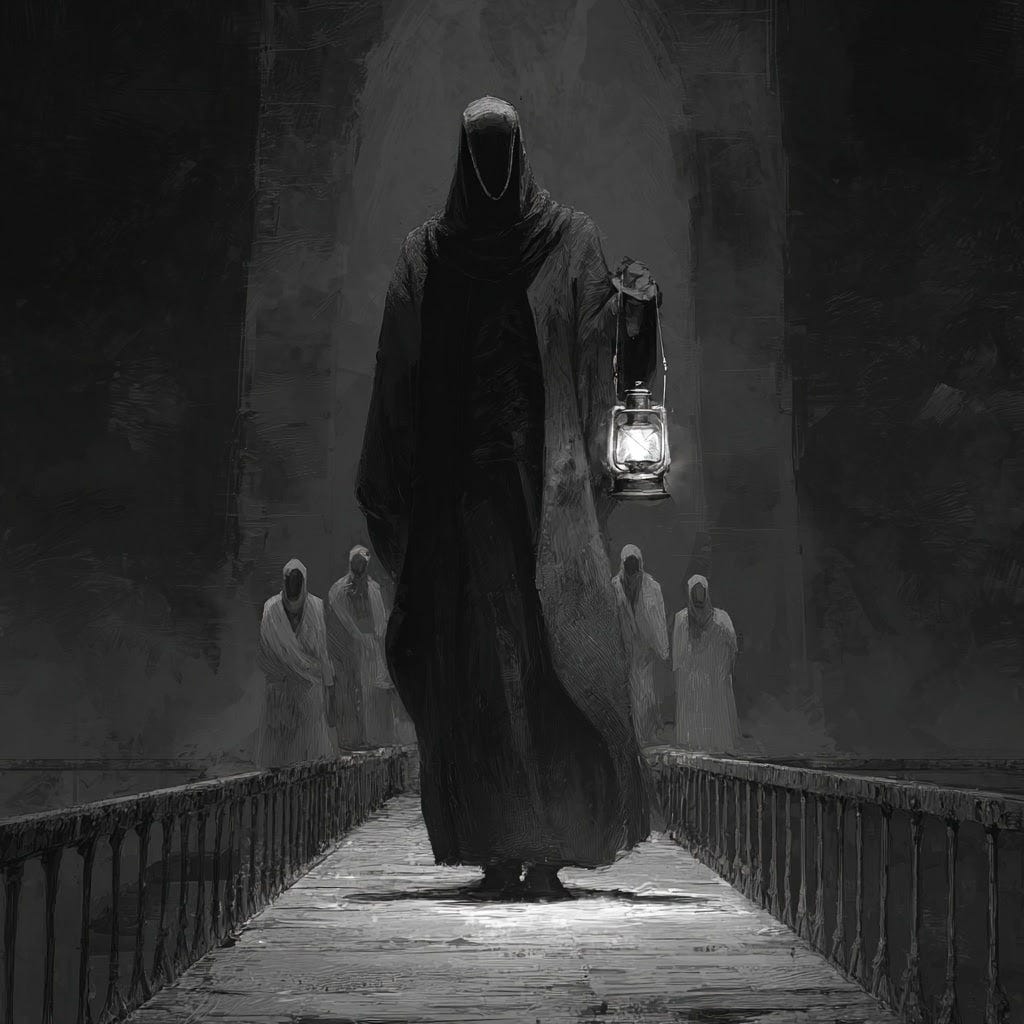
And the underworld extends its annual invitation:
What are you still avoiding?
What golden palace needs to collapse?
What shadow have you been romanticizing instead of facing?
What death have you been running from?
You can keep fighting. Keep building the palace higher. Keep the story intact. Keep the shadow in the bag. Keep pretending you’ve done the work when you’ve just been reading about it.
Or you can descend.
Let it dissolve. Die to who you thought you were. Sink to the bottom. Face what’s actually in the bag. Stop the shadow tourism and do the actual work.
The season demands it.Scorpio insists. The Death card turns. The ancestors call. Ereshkigal waits in her throne room for her naked sister to arrive.
This is the gift of autumn: The reminder that death isn’t the end. It’s the threshold. The passage. The dissolution that makes transformation possible.
Nature shows us this every year: The leaf must fall. The seed must rot. The earth must rest in darkness. Not as punishment. As prerequisite.
Choose the conscious descent, or it will be chosen for you.
I didn’t choose mine consciously. Life engineered the crisis that forced it. And I spent months resisting, fighting, trying to keep the palace standing even as it crumbled around me.
That resistance made it harder. Longer. More painful.
What I’m learning now: The descent is invitation, not punishment. The underworld isn’t hell - it’s where transformation happens. Death isn’t the enemy - it’s the passage to rebirth.
But only if you actually descend. Only if you let the death be real. Only if you sit in the dissolution instead of reaching for resurrection prematurely.
THE RETURN
Eventually, you return. Changed. Scarred. Humbled. Real.
You bring back what the underworld taught you. You serve from your wounds. You guide others not because you’re above the descent but because you know the terrain.
The golden palace stays collapsed. You don’t rebuild it. You live differently now - with less certainty, less performance, less need to be special.
But with more depth. More capacity. More ability to actually help.
That’s the bargain. That’s the exchange.
You give up the golden identity. You get back something real.
You lose who you thought you were. You find out who you actually are.
You die. And something truer is born.
Tonight, as the sun sets and the celebrations begin - whether you’re handing out candy, attending a party, building an altar for your dead, or sitting quietly with these mysteries - remember:
The season speaks. The underworld calls. The invitation stands.
Not because you’re cursed or marked or chosen. But because you’re human. And humans need initiation. Need death and rebirth. Need to descend and return.
The only question is: Will you go consciously or unconsciously?
Will you choose the descent or have it chosen for you?
Will you recognize the underworld when it appears, or will you just call it bad luck?
The gates are open.
The veil is thin.
Ereshkigal waits.
Happy Samhain. May your death be fertile. May your dissolution be complete. May something real emerge from the dark.

~ Jake Kobrin
— Jake Kobrin
October 31, 2025
Berlin, Germany
P.S. If this essay resonated, I’d love to hear about your own descent experiences - what you learned, what died, what emerged. Leave a comment below or reach out directly. We’re in this work together.
If you’d like to support this writing,you can buy me a coffee here.And if you’re ready to move from reading about transformation to practicing it, my bookThe Path Within: Ritual Magick and the Gateway to Self-Masteryis now available - an extensive guide to ritual magick, meditation, and the disciplines that lead to genuine self-mastery. Limited signed copies available for Europe/UK.Order here.
Read more of my writing and subscribe on Substack: jakekobrin.substack.com.
