Chosen Monogamy: Finding Freedom in Devotion
Originally published on my Substack, Writings From The Edge of the Known, where I write regularly. Subscribe there for new essays.
I know I’ve been writing a lot recently about relationship stuff, but it’s truly what’s alive and real for me right now. And it is also one of the biggest areas of human activity, something that fascinates me, and probably something I’m going to continue to learn about and share about for years to come.
It’s another morning. I wake up alone again, staring at the ceiling, the silence of my room amplifying the ache in my chest. Another relationship has ended, abruptly and painfully, leaving me knee-deep in the wreckage of what I’d believed love was supposed to be. This wasn’t my first heartbreak, but it was the first time I truly felt wounding and regret of this depth which was not just the loss of someone else, but the collapse of all of my illusions of myself - where I was at, how unprepared or mature I really was, everything that was totally unconscious and unskillful or that I’d falsey mistaken for self-knowledge.
For the past few years, I practiced polyamory, convinced it was the answer. At the time, it felt revolutionary, a dismantling of inherited scripts about love, commitment, and possession. It forced me to confront my attachment wounds head-on. When a partner’s attention wandered, my jealousy and fear of abandonment erupted within me, impossible to ignore.
Polyamory became an unflinching mirror. It showed me where I was insecure, where I sought external validation to fill internal voids. It taught me that no relationship structure, no matter how free or fluid, could absolve me of my responsibility to heal myself.
Yet for all its wisdom, polyamory kept me perpetually on edge. My nervous system buzzed like a live wire, raw and ungrounded and untempered. The freedom it promised often felt, in practice, like emotional turbulence. I couldn’t really see this at the time but now I understand.
So I swung to the other extreme: monogamy. I learned I actually really do love the container that can built between two people in devotion to love with each other. But I carried the same unexamined fears into it, the same unhealed wounds, and they festered in the shadows. Unconscious monogamy became fraught with projections, fantasies, and unexamined shadows - myths about "the one," commitment as control, jealousy as proof of love. The security I craved was fragile, built on unspoken expectations and unvoiced agreements and needs. When my partner acted freely in a way that challenged my security, I collapsed.
What I know now is that neither polyamory nor monogamy is the answer. I am what I guess you could call “ambiamorous” - meaning open to both relationship configurations if they are aligned and mutually agreed upon. Both are simply containers and opportunities to do the real work beneath, which is to develop self-awareness, emotional sovereignty, and ruthless honesty and transparency - with ourselves and with our partners.
Right now, I’m in a relational wasteland. I’m a process of healing and learning - not dating, and not in a relationship. It’s a liminal space. I’m sitting with my wounds, undistracted, learning how to show up differently next time.
And what I’m moving toward is something I call “Chosen Monogamy”, a conscious, daily renewal of devotion. This commitment isn’t born from fear, obligation, or societal scripts, but rather from two sovereign beings choosing each other, again and again, without demands or conditions.
The shadows of unconscious monogamy are all too familiar to me: staying out of fear, mistaking possession and control for love and devotion, swallowing our truth to preserve false security. I’ve lived those lessons.
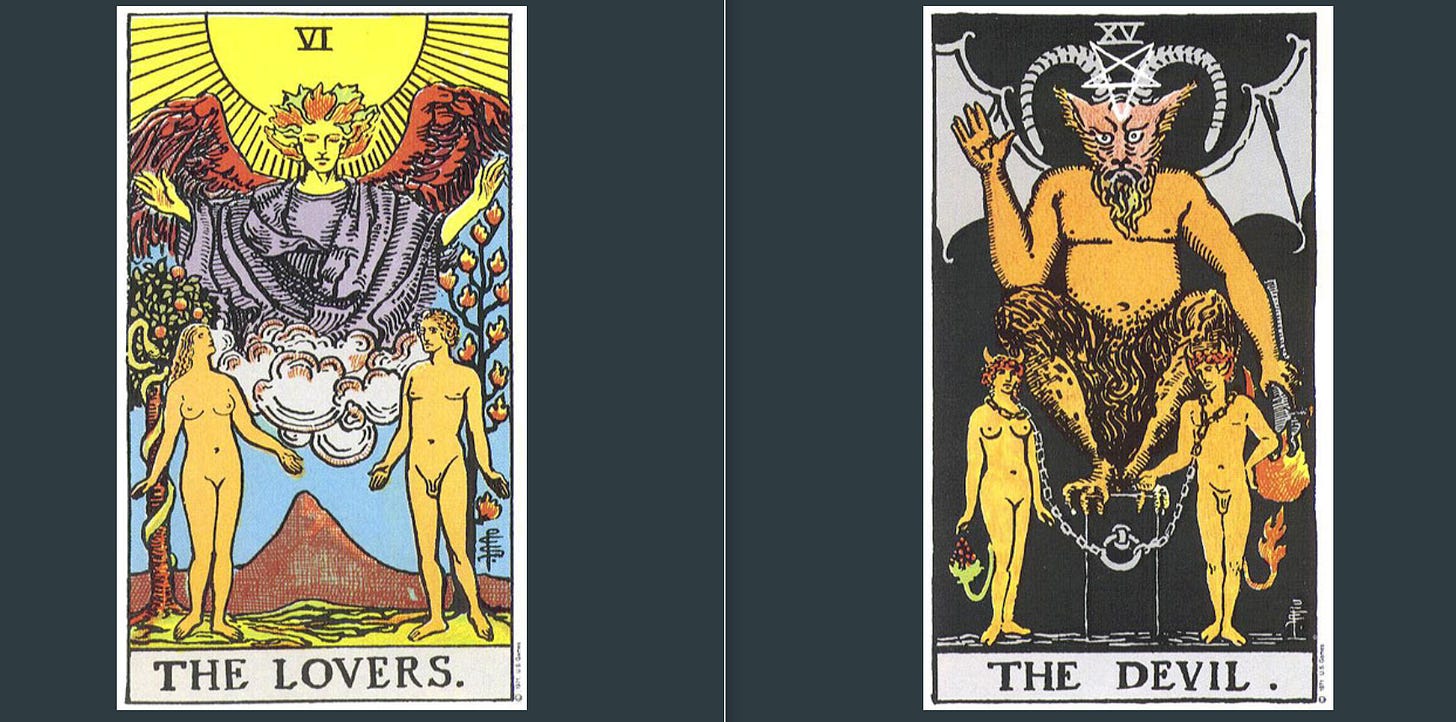
Chosen Monogamy, by contrast, rests on radical transparency, mutual sovereignty, and trust as an active practice. It recognizes that freedom is the foundation of true devotion and love flourishes not in the absence of commitment, but in the presence of choice.
I’m also drawn to Relationship Anarchy, with its insistence on discarding hierarchies and interrogating every assumption about love. Yet I crave something more defined: an emotional container deep enough for intimacy, stable enough for trust, but flexible enough to honor our full and messy humanity.
For now, I’m learning to love without grasping, to release control, and to desire without demanding, gripping, or manipulating in any way. I am learning to see freedom and true love found on clarity and innocence and choice as sacred ground.
It’s not really about finding the "right" relationship structure. It’s about becoming the kind of person who can love openly and truly: fiercely, freely, without conditions. Someone who is devoted to love for its own sake. It’s about building an inner sanctuary strong enough to hold both radical trust and profound devotion.
Maybe love isn’t about the agreements we make, but the actual lived presence we bring to our relationships. Love doesn’t flourish in chains, but in the courage to choose each other day after day, because the choice itself is the gift.
That’s my commitment now, and though I may stumble and fall, I am aiming now to live with integrity, kindness, and the willingness to love without conditions. I’m learning that it’s not really about reliance on any external relationship structure but rather the unshakable home I’m building within myself. And that’s hard work, but I’m committed to it every single day.
I’m not sharing from a place of being “fully cooked” as Ram Dass would call it, but rather someone who’s in an active process of trying, failing, and learning, and sharing what I discover along the way.
I hope this reflection is helpful,
— Jake Kobrin, Ubud, Bali, April 2025
Read more of my writing and subscribe on Substack: jakekobrin.substack.com.
